February 19, 2026
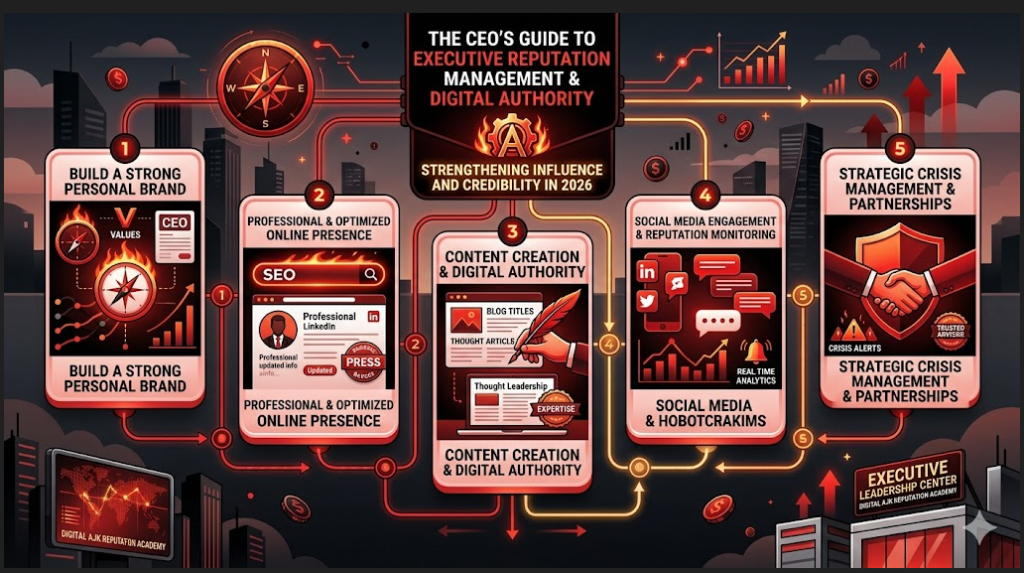
The first step in building executive reputation is establishing a strong personal brand. A CEO must clearly define their voice, values, and expertise. This includes identifying key topics they want to be known for, such as innovation, leadership, sustainability, or industry insights. Consistency in messaging across all digital platforms helps reinforce this identity and builds recognition over time.

A professional and optimized online presence is equally important. When someone searches for a CEO, the results should reflect credibility and authority. This means maintaining updated LinkedIn profiles, personal websites, and relevant media features. Search engine optimization (SEO) plays a vital role here, ensuring that positive and authoritative content ranks higher than irrelevant or outdated information.
Content creation is a powerful tool for building digital authority. CEOs who regularly share insights, thought leadership articles, and industry commentary position themselves as experts in their field. Publishing blogs, participating in interviews, and contributing to reputable platforms not only increases visibility but also strengthens trust among audiences. Authenticity is key—audiences are more likely to engage with leaders who communicate transparently and provide genuine value
Social media engagement is another critical component. Platforms like LinkedIn and Twitter allow CEOs to connect directly with their audience, share updates, and participate in important conversations. Engaging with comments, responding to feedback, and acknowledging trends humanizes leadership and makes executives more approachable. However, maintaining professionalism and strategic communication is essential to avoid reputational risks.
Online reputation monitoring is equally vital. CEOs must stay aware of what is being said about them across digital channels. Tools that track mentions, reviews, and media coverage can help identify potential issues early. Addressing negative feedback promptly and professionally demonstrates accountability and can even strengthen public perception when handled correctly.
Crisis management is an unavoidable aspect of executive reputation. In times of controversy or negative publicity, a well-prepared digital strategy can make all the difference. Clear communication, transparency, and timely responses help control narratives and minimize damage. CEOs who handle crises effectively often emerge with stronger credibility and trust.
Another key factor is building strategic partnerships and media presence. Collaborating with industry leaders, speaking at events, and being featured in reputable publications enhances a CEO’s visibility and authority. These opportunities not only expand reach but also reinforce expertise and leadership status.
Ultimately, executive reputation management is not a one-time effort—it requires ongoing commitment and adaptability. The digital landscape is constantly evolving, and CEOs must stay proactive in maintaining their presence and relevance. Those who invest in their digital authority gain a competitive advantage, attract opportunities, and inspire confidence among stakeholders.
In conclusion, a CEO’s digital reputation is one of their most valuable assets in 2026. By building a strong personal brand, creating meaningful content, engaging with audiences, and proactively managing their online presence, leaders can establish lasting influence and credibility in a highly connected world.
If you’re ready to elevate your executive presence and build powerful digital authority, Digital AJK can help you achieve your goals. With expertise in reputation management, personal branding, and strategic digital growth, Digital AJK empowers CEOs to lead with confidence, strengthen their influence, and stand out in today’s competitive digital landscape.
“Strategic Communications for the Global Stage.The Voice of Strategy,The Pulse of Digital”
© 2025 All Rights Reserved DigitalAJK