February 19, 2026
Crisis communication refers to the process of managing information and messaging during a disruptive or high-risk situation. In the past, leaders had more time to craft responses through traditional media channels. Today, digital platforms such as social media, news websites, and instant messaging apps demand immediate, transparent, and consistent communication. This shift has fundamentally changed how crises are handled.

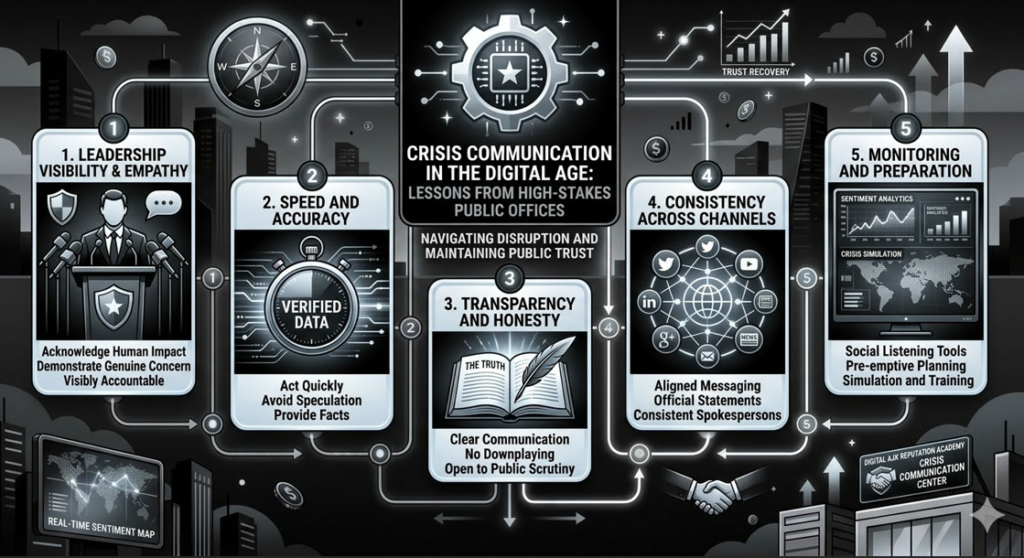
One of the most important lessons from high-stakes public offices is the need for speed and accuracy. When a crisis emerges, silence or delayed responses can create a vacuum filled by speculation and misinformation. Leaders must act quickly to acknowledge the situation, provide verified information, and outline initial steps being taken. However, speed should never come at the expense of accuracy. Sharing incorrect information can damage credibility even further.
Transparency is another key principle. Modern audiences expect honesty and openness from leaders, especially during difficult times. Attempting to hide facts or downplay the severity of a situation often leads to public backlash once the truth emerges. High-stakes public offices have shown that clear, transparent communication—even when the news is unfavorable—helps build long-term trust.
Consistency across channels is equally essential. In the digital era, messages are distributed across multiple platforms simultaneously. Any inconsistency between official statements, social media posts, and press briefings can lead to confusion and mistrust. Successful crisis communication strategies ensure that messaging is aligned across all channels and spokespersons.
Another critical lesson is the importance of empathy. Crises often involve human impact, and audiences expect leaders to acknowledge this. Demonstrating empathy through tone and language helps humanize leadership and shows genuine concern for those affected. This emotional connection can significantly influence how messages are received and perceived.
Monitoring and managing public sentiment in real time is also a defining feature of digital crisis communication. Social listening tools allow leaders to track conversations, identify emerging concerns, and respond proactively. High-stakes public offices use these insights to adjust their messaging, address misinformation, and engage directly with the public when necessary.
Preparation plays a vital role in effective crisis communication. The most successful leaders do not wait for a crisis to occur—they plan for it in advance. This includes developing crisis communication frameworks, identifying key spokespersons, and conducting simulations. Being prepared enables faster and more coordinated responses when real situations arise.
Another lesson is the role of leadership visibility. During a crisis, people look to leaders for reassurance and direction. High-stakes public officials often take a visible role, addressing the public directly through press conferences, video messages, and social media updates. This visibility reinforces accountability and helps maintain confidence.
Digital platforms also introduce the challenge of misinformation and fake news. False narratives can spread rapidly, complicating crisis management efforts. Leaders must actively counter misinformation by providing clear facts, collaborating with credible sources, and leveraging verified channels to amplify accurate information.
Finally, post-crisis communication is just as important as the initial response. Once the immediate situation is under control, leaders must continue communicating updates, lessons learned, and steps taken to prevent future incidents. This ongoing transparency helps rebuild trust and demonstrates commitment to improvement.
In conclusion, crisis communication in the digital age requires a balance of speed, transparency, empathy, and strategic coordination. Lessons from high-stakes public offices highlight the importance of preparation, consistent messaging, and active engagement with audiences. As digital platforms continue to evolve, leaders must adapt their communication strategies to navigate crises effectively and maintain public trust.
If your organization wants to strengthen its crisis communication strategy and protect its reputation in the digital era, Digital AJK can help you achieve your goals. With expertise in strategic communication, digital monitoring, and brand management, Digital AJK equips you with the tools and guidance needed to respond confidently and effectively in high-pressure situations.
“Strategic Communications for the Global Stage.The Voice of Strategy,The Pulse of Digital”
© 2025 All Rights Reserved DigitalAJK